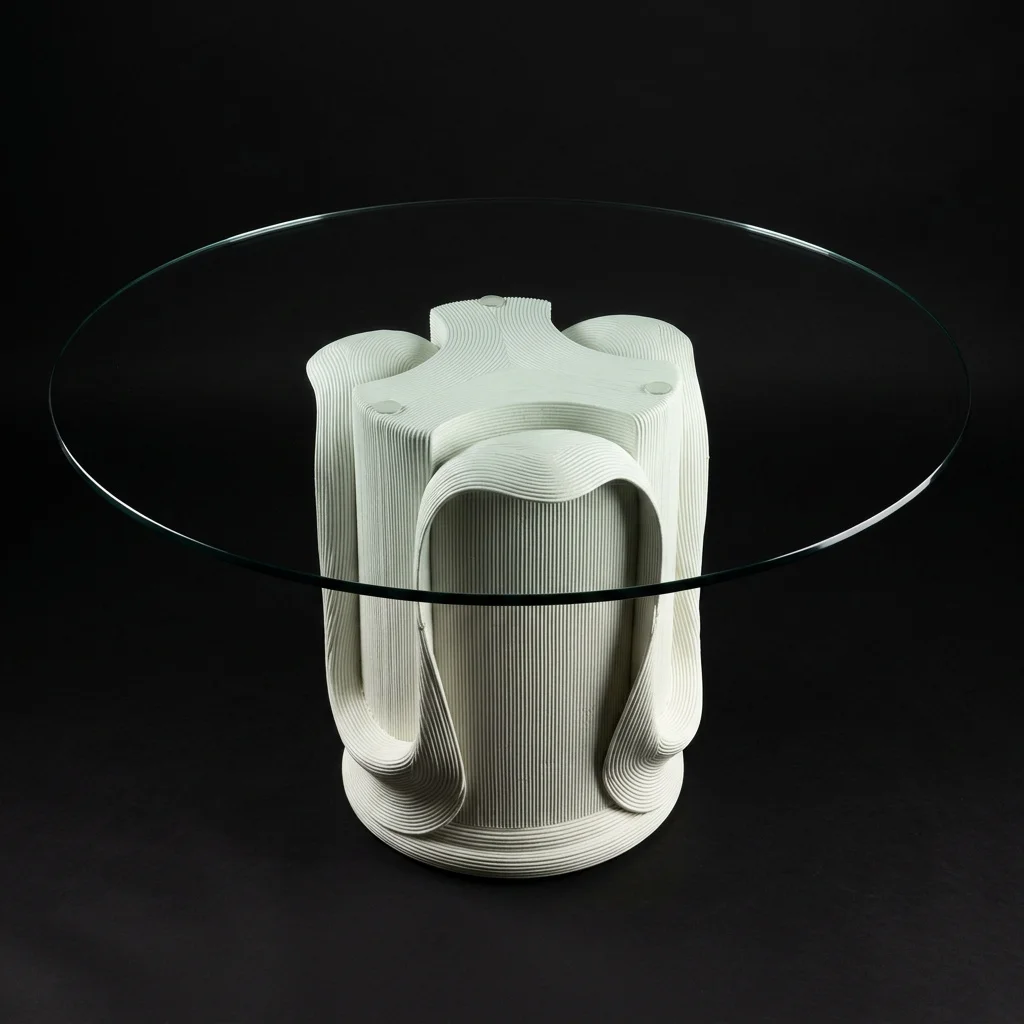
Pencil reed is the rattan-family material you'd find wrapped around a tropical hotel bar in the seventies, or built into the lattice of a sunroom in the eighties. Most of what's left has gone yellow under decades of Pacific sun. This table is the exception.
It was designed by Betty Cobonpue, the matriarch of one of the great furniture families of the Philippines. Betty founded Interior Crafts of the Islands in Cebu in 1972, building her first pieces with a few carpenters in the backyard of the family home. Her son Kenneth's name is now on chairs in museum collections from Cologne to Tokyo.
Betty was the one who decided, in a country that imported almost all of its furniture, that the Philippines was going to make its own.
Out of materials that grew in their own islands. By craftspeople who lived in their own province. She used pencil reed because it was abundant, sustainable, and made of a thousand small parallel lines. Bundled and shaped, it reads like brushwork. Up close you can see every reed. From across a room it dissolves into a single soft volume.
This particular one is in beautiful shape. The reed has darkened to honey but hasn't gone brittle. The base is sturdy. It seats six comfortably, four with elbow room. It's been the piece people walk over to first.
Discovered in Hawaiʻi. $1,200. One available.
If you have a dining nook that could use some gentle weather, this is the piece.